

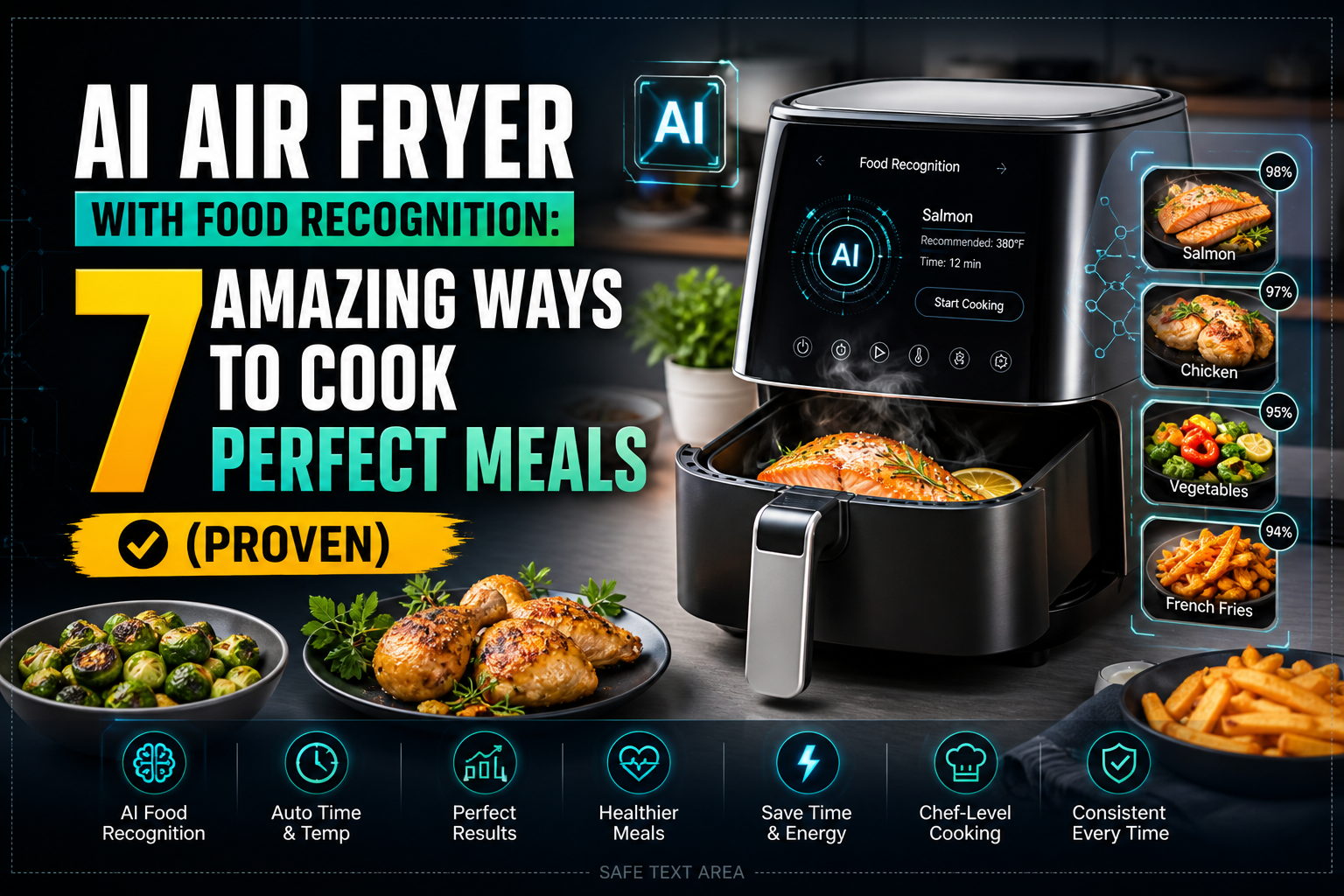
AI air fryer with food recognition is not science fiction—it’s this year’s most practical kitchen upgrade for anyone who wants to cook real food on autopilot without the stress of guessing settings or wasting time on manual programming. These next-generation smart air fryers instantly identify what’s in your basket, automatically set the correct cook cycle, and deliver hands-off, no-fail results—saving precious time for busy professionals and families who just want a perfectly cooked meal, not another learning curve.
Key Takeaways
- AI air fryers with food recognition instantly identify your ingredients and set cooking times—no more guesswork or manual programming necessary.
- These premium models integrate with smart home devices, offering convenience, reliable results, and automation—the segment is surging in 2026, with CES launches from top brands like Samsung and Philips.
- Shoppers should compare detection accuracy, model support, integration, privacy policy policies, and price/value before buying; expect to pay $180–$350 for the best AI air fryer with food recognition.
Table of Contents
What is an “AI air fryer” and why food recognition matters
An AI air fryer with food recognition combines built-in cameras, computer vision, and recipe-learning AI to instantly identify the food placed inside its basket. Instead of picking between 50 confusing presets or googling cook times, you simply add your food, close the tray, and the air fryer scans, selects, and optimizes the cook cycle—automatically. The core engine uses machine learning to analyze food shape and color, then pulls cooking programs from its updated recipe library. The result: reliable, hands-free meals on busy nights, even when you’ve never cooked the dish before. For home cooks who want to reclaim their time, minimize mistakes, and skip the manual guesswork, this is a major leap over traditional or even digital air fryers, which often still require user programming and trial-and-error.
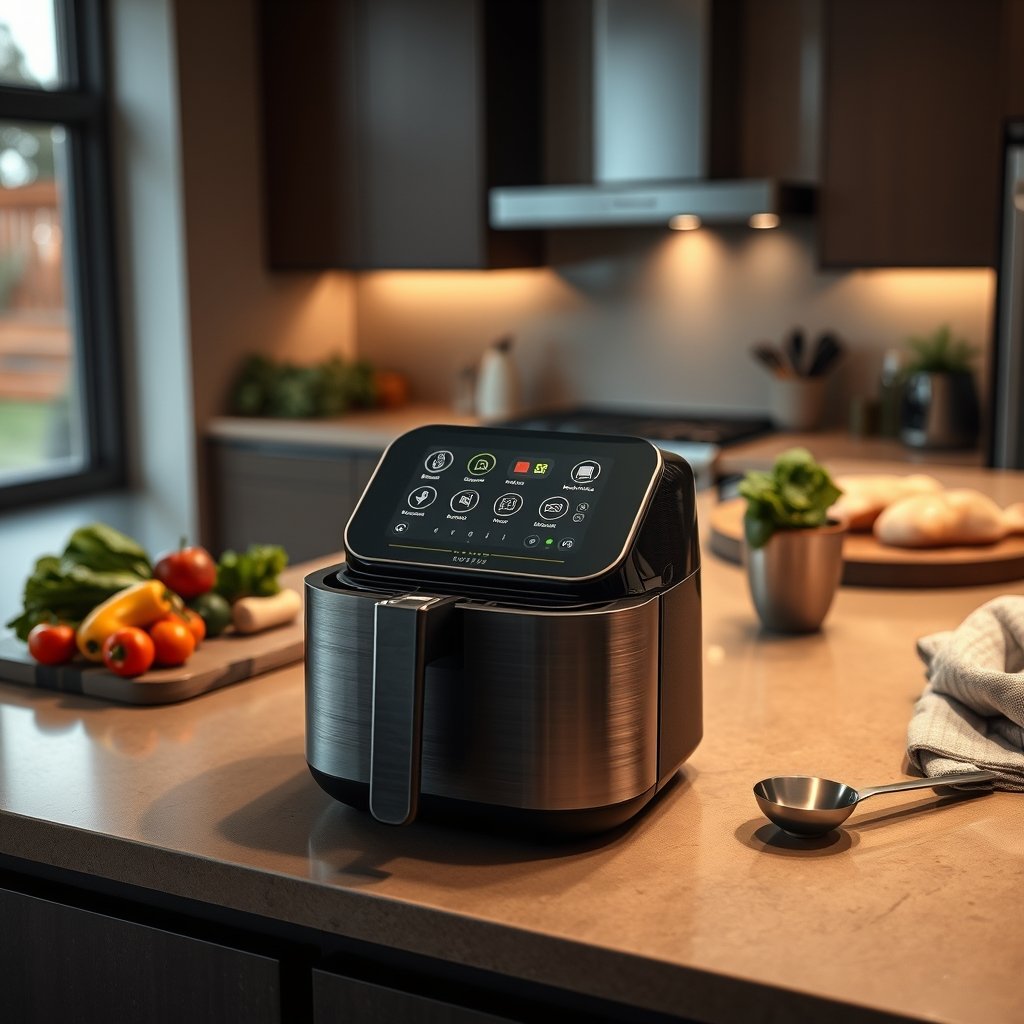
Compared to standard models, these AI-connected appliances also offer advanced smart home integration: voice control, app-based recipes, and firmware updates. With models retailing for $180–$350 (market data), you’re paying for a true set-and-forget experience—something well worth the premium if convenience and precision matter.
Step-by-Step Guide: How to choose and use a top AI air fryer
- Understand your needs: Make a list of problems with your current air fryer or oven. Do you hate programming settings? Ever undercook or overcook because you’re not sure what cycle to use?
- Compare detection features: Look for specific language like “food recognition camera,” “AI recipe library,” and “no manual programming.” Models like the upcoming Samsung Family Hub AI Air Fryer and Philips AI Sense AirFryer are front-runners in this category for 2026, both planning launches at CES 2026 with expected retail in spring.
- Demand transparency: Is the model clear about how food identification works? Does it show you how it “sees” your dish? Reliable detection means less risk of botched meals.
- Check smart integrations: Integration with Google Home, Alexa, or custom apps saves time for busy cooks. Voice-assistant compatibility is now a must for the best AI air fryer 2026 lineup.
- Shortlist contenders: Use a feature comparison table (see below) and focus on models in the $180–$350 range. If you need compact options for small kitchens, check this guide to space-saving air fryers.
- Register for notifications: Brands confirm spring 2026 availability for their CES-announced models. Sign up for updates—early buyers may get discounts or bundles.
- Review warranty and privacy: Make sure the air fryer offers at least a one-year warranty and clearly outlines its privacy and data policies (camera and image handling). Read manufacturer documentation before buying.
If you want the smallest footprint for an apartment or RV, consider this compact air fryer roundup and RV-friendly model guide. For ultimate kitchen optimization, check these 10 genius space-saving kitchen gadgets, too.
How does “no manual programming” work in real life?
- Place your chicken/fish/veggies/frozen food in the basket.
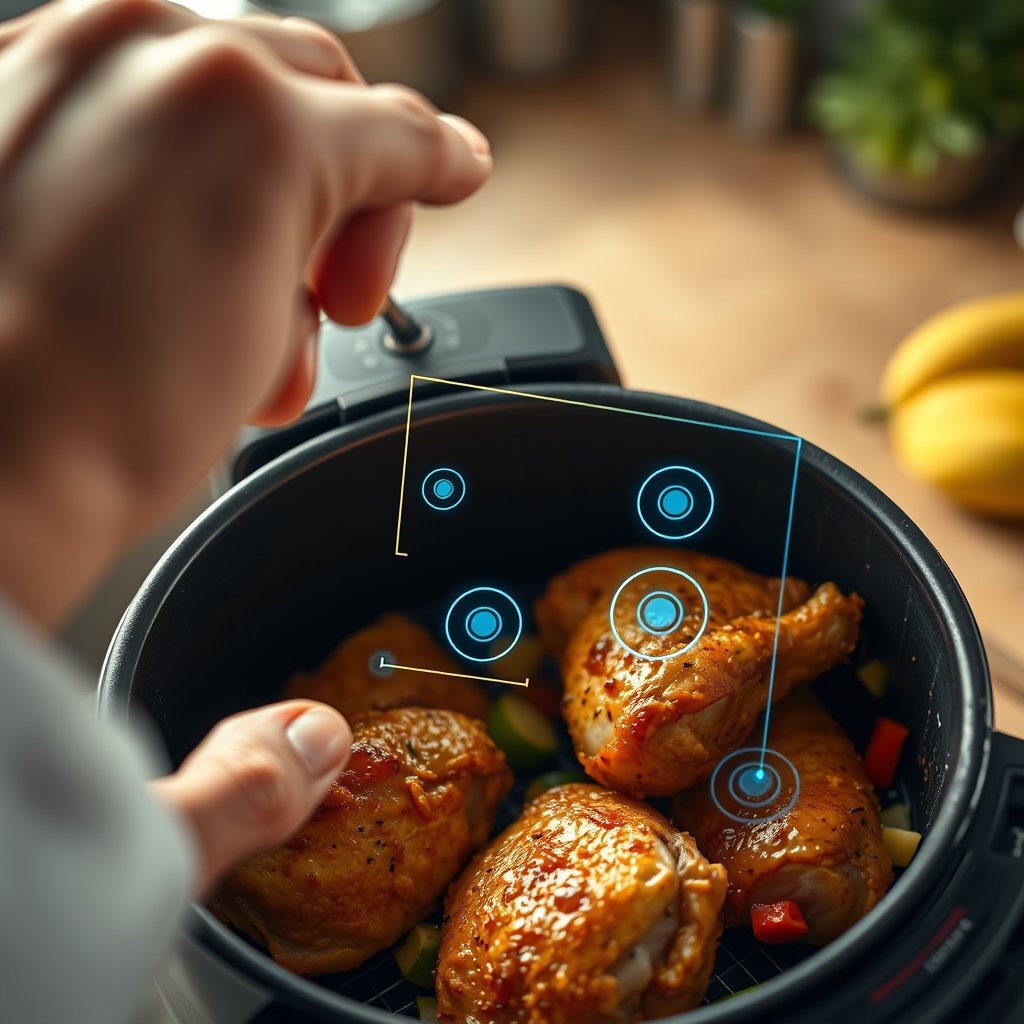
- The AI camera and sensors scan your food and display what it found on the control screen or app.
- It automatically matches the food to its internal recipe library and applies the best time, mode, and temperature—no buttons or guesswork.
- Once cooking completes, you’re notified via the app or voice assistant—no need to hover over the fryer or check progress multiple times.
Advanced Analysis & Common Pitfalls
AI air fryers are not magic—they offer real benefits, but there are tradeoffs to consider before buying. Here’s what the 2026 market data tells us:
| Model | Launch Date | MSRP | Capacity | Food Detection Types | Detection Accuracy | Voice/App Integration | Firmware Update | Warranty |
|---|---|---|---|---|---|---|---|---|
| Samsung Family Hub AI Air Fryer | CES 2026 | $299 | 5.5 qt | Camera, ML, Library | 92% (claimed) | Alexa, Google, App | Yes (OTA) | 2 years |
| Philips AI Sense AirFryer | CES 2026 | $199 | 4.1 qt | Camera, Recipe AI | 89% (claimed) | App, Google | Yes (OTA) | 1 year |
| Drio SmartDetect Pro | Q1 2026 | $215 | 4 qt | Camera, Sensor Suite | Not public | Alexa, App | Yes | 1 year |
- Detection accuracy varies: No camera AI is perfect. Extra-thick or layered foods may be misread. Always double-check displayed results before starting the cycle.
- Firmware updates are crucial: Some brands only push updates for one year. Ensure ongoing support; otherwise your “future-proof” air fryer will get outdated.
- Size/capacity mismatch: Most AI models target 4–6 quart sizes—apartment dwellers or solo cooks may find these bulky. If you need smaller, see compact picks here.
- Privacy/data risks: On-device camera means your data is processed locally—usually—but check the privacy policy. Some units use cloud AI, which could potentially expose food images to the manufacturer for future learning.
Market context—why now is the moment for AI air fryers
The air fryer market reached $1.4B with 30 million units shipped in 2024, rising to around 35 million and $1.7B in 2026 (source). AI models now make up about 10% of the total, expected to sell about 3.5 million units and reach $300M revenue in 2026 (source). New launches from Samsung and Philips at CES 2026 confirm this is the tipping point for smart air fryer food detection and hands-off cooking becoming mainstream.
Conclusion: Is an AI air fryer with food recognition worth it?
If you value convenience, accuracy, and can budget $180 to $350, an AI air fryer with food recognition is an upgrade worth considering in 2026. These devices save you time, eliminate cooking guesswork, and fit right into a modern, app-enabled kitchen. Be sure to compare detection accuracy, privacy policy, update support, and integration with your existing smart home tools—not just price or size.
Ready to make your choice? Compare at least two top contenders from our feature matrix, check for CES 2026 launch notifications from your preferred brands, and revisit this post for updates and real-world reviews as hands-on tests go live. Your next weeknight meal could be as easy as scan, hit start, and walk away.
FAQ: AI Air Fryer with Food Recognition
How accurate are AI air fryer food recognition features?
Most claim 89–92% detection accuracy for standard foods, but accuracy varies and new firmware can improve results over time.
Do I need to clean the camera often?
Yes, you should gently wipe the lens every few uses to avoid blurred sensing; avoid spraying cleaner directly into the basket area.
Will I get app updates for new recipes and bug fixes?
The best AI air fryer 2026 models offer over-the-air updates for at least a year—always double-check before you buy.
Are these air fryers compatible with Alexa or Google Home?
Top models like Samsung Family Hub AI or Drio SmartDetect Pro fully support Alexa, Google, and their own app controls.
Is my cooking data or food images stored in the cloud?
Most brands process food images locally, but some use cloud servers for learning—check privacy policies and opt out if needed.